
Lapita in Development: A Theory of Exploration

Endlessness. That's what I envisioned. I wanted exploration writ large in cardboard form when I thought of what I wanted in a board game. A finish line that only appears if you search for long enough to find it. A board with 297 hexes of open ocean. A small island on which nothing resided unless you built it.
The sheer endlessness of it all.
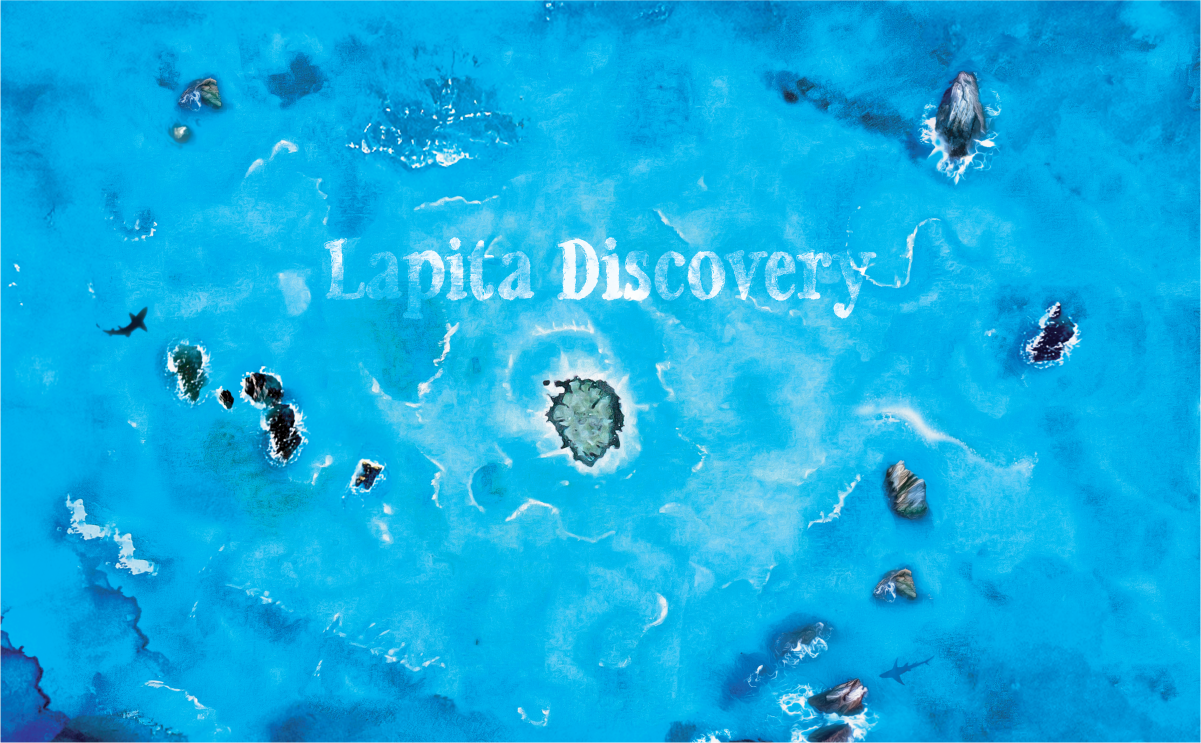
Yet - and perhaps this is obvious in hindsight - the sense of exploration is not conveyed in expanse alone, if at all. Indeed, the sensation of vastness is not necessarily delivered by the size or breadth of the components. How is it conveyed?
I think video games offer some guidance here. Open world games deliver exploration only insofar as there is detail to find. Hogwarts Legacy, for instance, feels shallow and empty in spite of its sweeping and beautiful countryside that sprawls far and wide. It is big and beautiful, sure, but there's no depth, no magic, to be found. Contrast Elden Ring, where you could notice a small nook in a rock that you investigate, and it leads to a staircase, with a door to a lair, where an NPC points you to an elevator, and suddenly you're sinking into a labyrinthine underworld, sneaking across the roofs of a dense hamlet to avoid poisonous slugs. The reward of curiosity.
And counterintuitively, in Hogwarts Legacy, the freedom to go anywhere steals from the sense of exploration. Exploring a school out of hours should come with the thrill of doing something forbidden, the threat of being caught. Elden Ring uses soft difficulty barriers to achieve this - if you're not good enough, you won't last long in a particular area. And the moments that you do survive above your level feel like you are stealing a glimpse into the forbidden - the thrill of exploration. Farcry 4 achieved this more overtly - the entire world was 'enemy territory' in which you sneaked around until you liberated that section of the map. Perhaps freedom, especially in games, is formed by the very reins from which you escape…
In my first conception of Lapita, I landed on this:
A large sweeping expanse that would grow as there would be an additional board added to 1 of the 6 edges of the map. I moved a small sewing pin across the map - the definition of 'playtesting' stretched threadbare - and was assured that I was living out Columbus-esque dreams (I had yet to settle on the Polynesian sailing theme). So I developed it further, creating a bigger board, larger horizon tiles, more components…
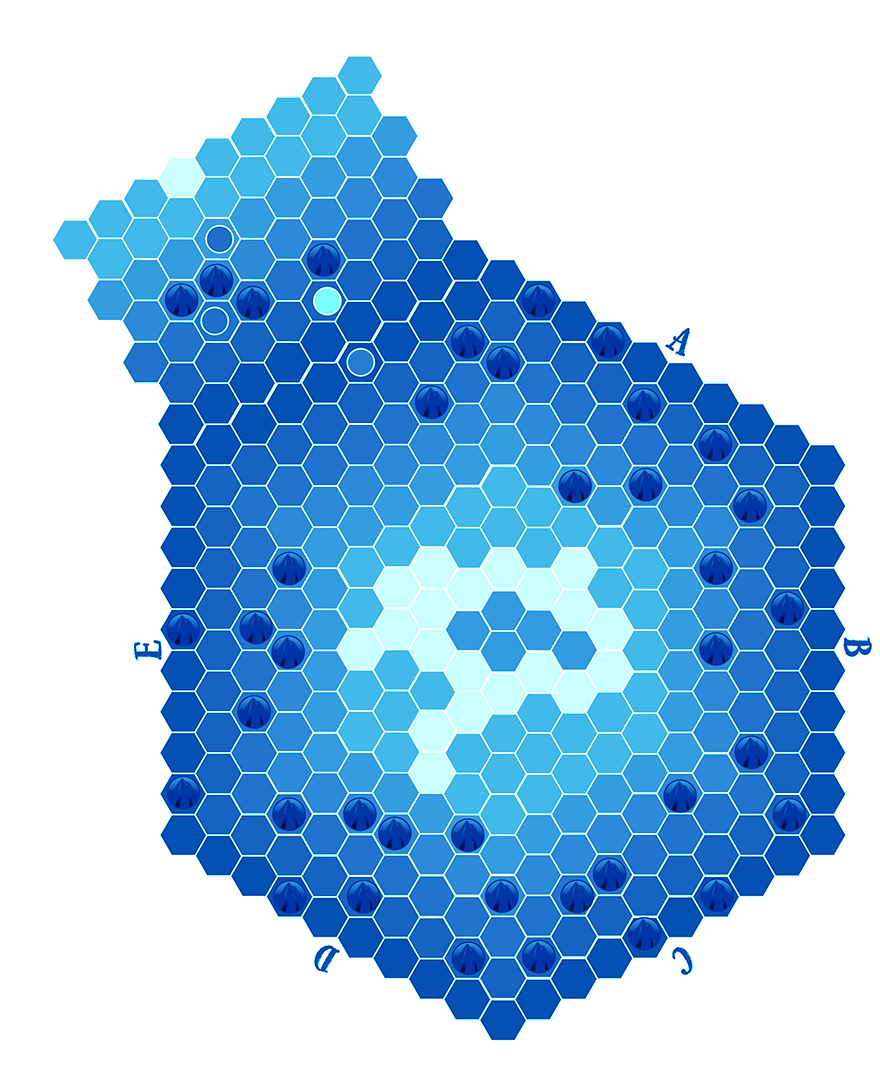
Countless issues notwithstanding (and I'll discuss these in later blogs) the sense of exploration was near zero. The traversing of the vast board was a couple degrees of agency above a roll-to-move. Sailing was simply a long-winded proxy mechanism to gamble on one of the six horizons.
I had confused scale with possibility. I had unconsciously inherited a very modern idea of liberty: that freedom means the absence of restriction. Endless sea. Endless movement. Endless possibility. But the genealogy of liberty (Quentin Skinner) tells a more complicated story. Freedom has historically not meant the absence of all constraints, but liberation from particular constraints. One is not simply “free”; one is freed from a king, from a prison, from debt, from danger, from occupation. Freedom is relational.
Games reveal this especially clearly because they are systems entirely made of constraints. A game without restrictions is not freedom - it is formlessness.
So what does it mean to be free in a game?
The Hogwarts and Elden Ring contrast already suggests an answer: constraints within games, counterintuitively, create freedom. The blocked routes in Brass: Birmingham make the canal network worth mastering. The dwindling card hand in Gloomhaven creates the exhilaration of barely surviving. The cubes in Pandemic are not obstacles preventing play; they are the very conditions that make play possible. Remove them and you do not get infinite freedom; you get nothing to care about.
Constraints and obstacles to our goal ask us to choose how we navigate those constraints; we develop agency in trying to overcome these obstacles. If I come across a large rock on my path, I will start plotting ways to overcome it: digging under it, building a ladder over it, chiselling a path through it. If I imagine it, and it turns out the game allows for my idea, that feels like freedom.
What follows from this is that agency - the ability to choose between your own distinct and genuinely different options - is the constitutional core of freedom within games.
So I added rocks, whirlpools, choppy seas, and precarious canoes capable of being blown in the wrong direction. Constraints galore. The player was already equipped with ways to plot for these constraints in their player board (for another blog).
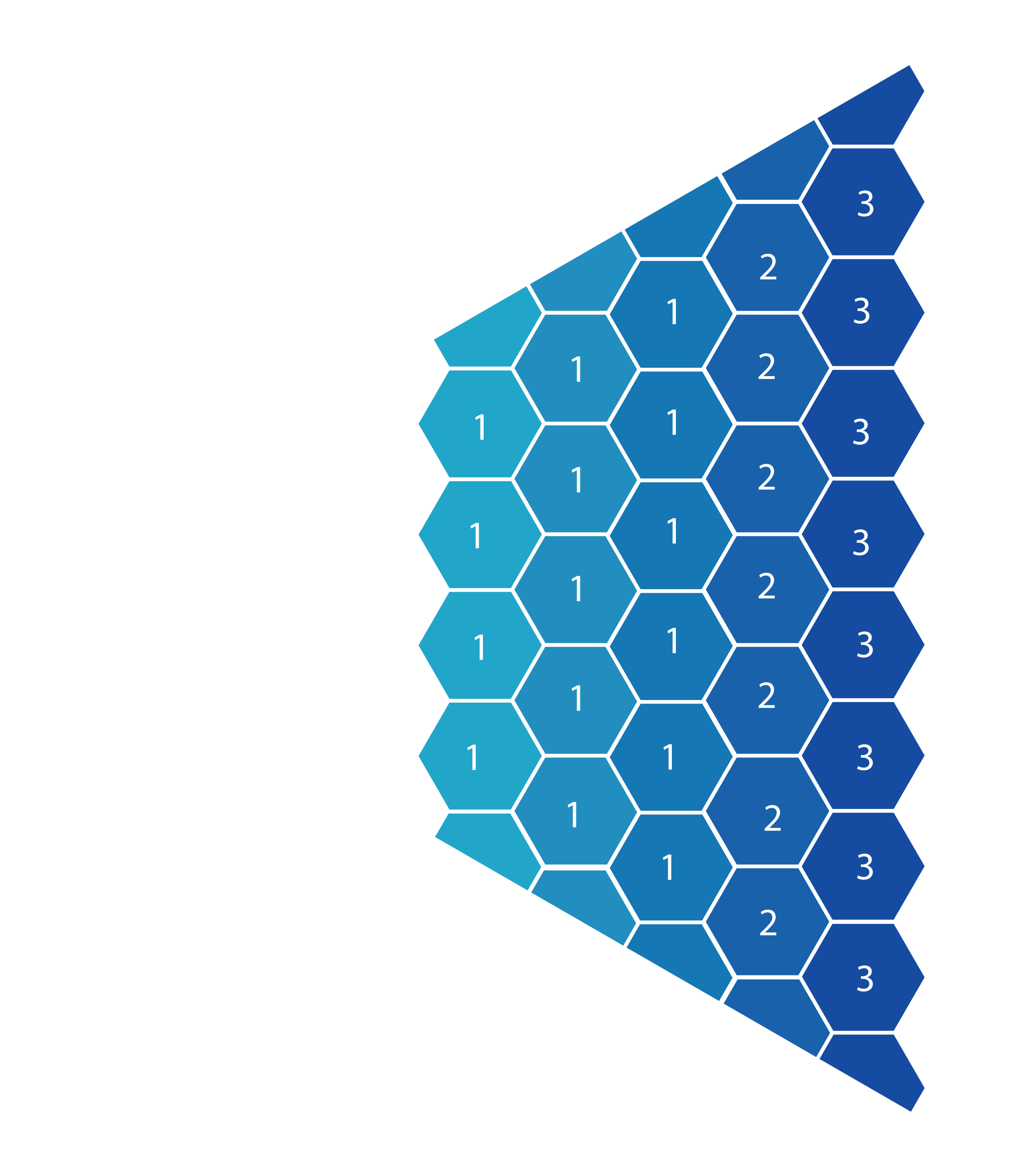
Yet still there wasn’t the feeling of exploration I was hoping for.
So what was depleting the feeling of agency?
While agency can be quietly diminished by too few restrictions, it can also be quietly strangled by too strong a compulsion. A player who can theoretically go anywhere, but who is drawn irresistibly toward one optimal move, is not really choosing at all. They are being led.
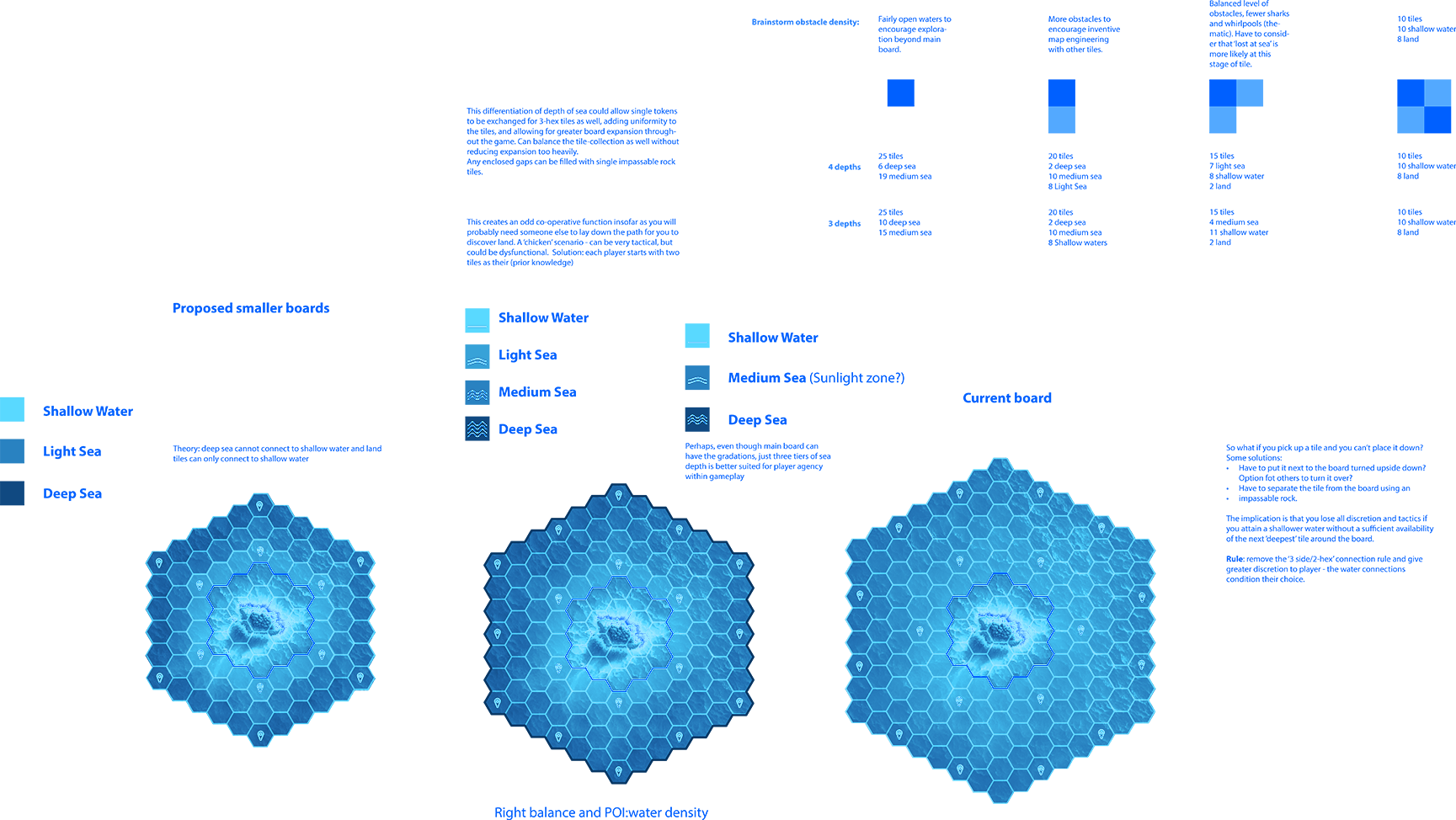
This is precisely what a known finish line does to an exploration game. In the earlier conception of Lapita, when the ‘island board’ was added and a single finish line was revealed to all players, the shortest path became the only path. Agency collapsed into a single compulsion, and I could only try to add randomised outside factors to separate the players. The winner was effectively set in stone by positional logic.
Ultimately, there is a difference between optimisation and exploration. A solved route is not exploration. Once players can calculate the correct line of play, the sensation of discovery collapses into administration.
So how do we remedy this?
The race games that inspired a lot of Lapita mechanics - Heat:Pedal to the Metal, Quest for El Dorado, Snow Tails - were all useful examples of increasing agency. But agency and exploration are not interchangeable. In these race games, the destination is known. The unknowns are threaded into the mechanisms of movement, not the map itself. You are choosing how to travel, never where to arrive.
My proposed remedy for exploratory agency was twofold: an unknown finish line, and a reason to think twice about even heading to the finish line.
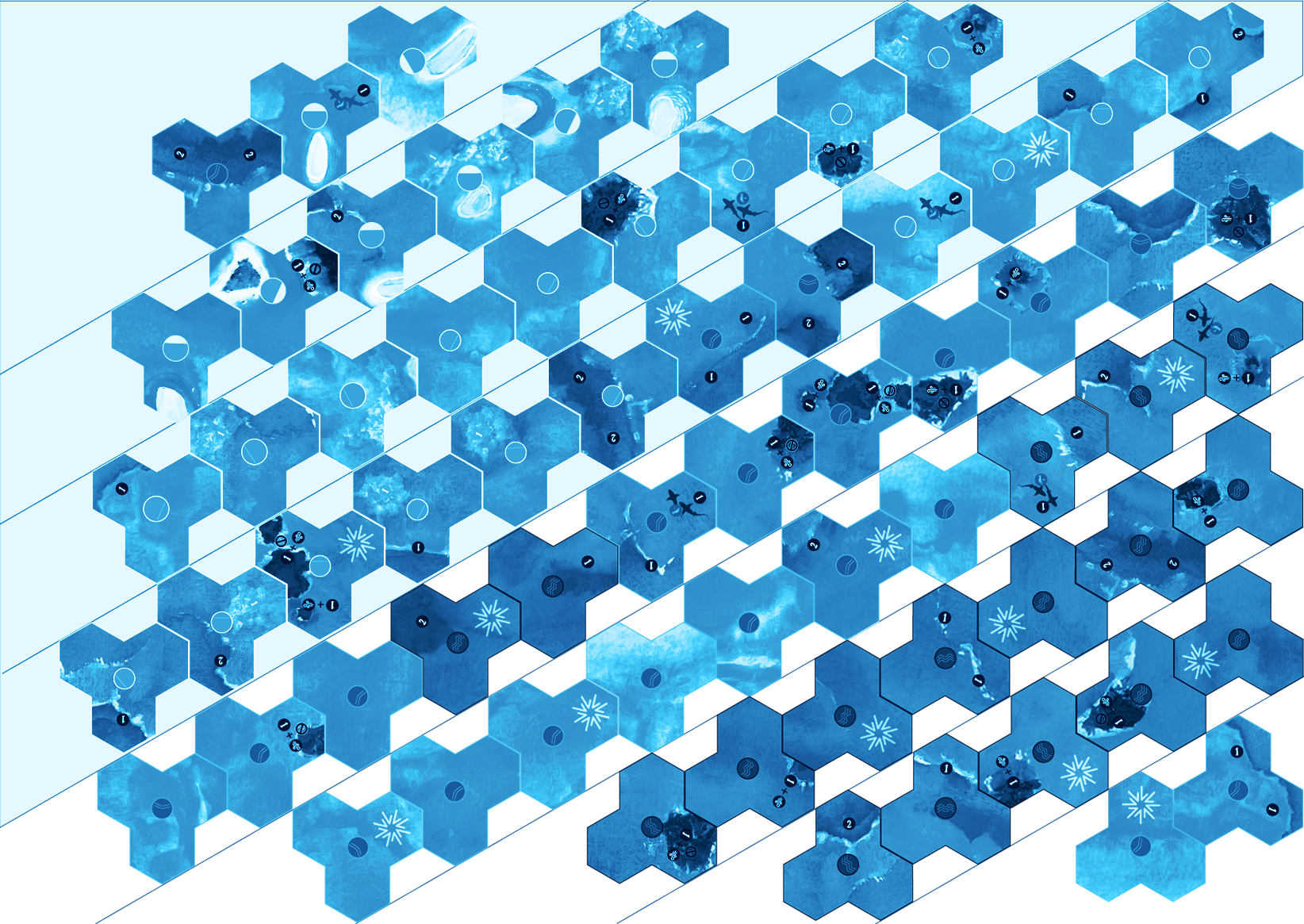
The tile-laying mechanic, borrowed from Cascadia and Akropolis, provided the first solution. As tiles are drawn and placed, the board grows outward unpredictably and players create the world as they traverse it. The destination cannot be optimised because it does not yet exist. Each new tile is a small act of discovery for which you need to seek etaks to increase the likelihood of discovering land. This three-stage end-game - collection, discovery, race - diversifies objective for players that are inter-related but not the same. Optimising one can jeopardise your ability to do the other. I think there is a lot of freedom in choosing your unique path to overcome these restraints, to how you lay out tiles and build the map, and ultimately your path to victory.
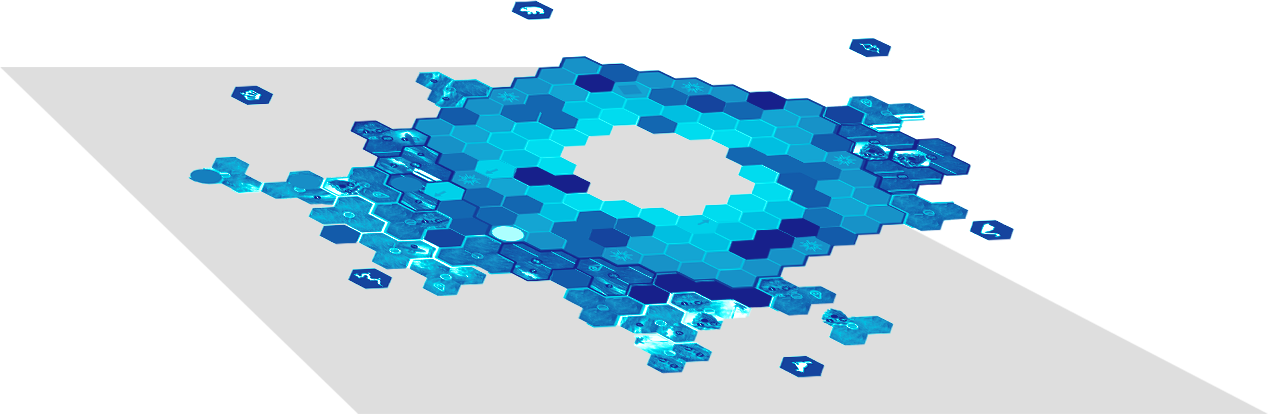
The second resolution demanded what Eugen Finks calls a “fear-structure”. In Lapita, this came from the ocean itself: the closer your canoe drew to land, the more treacherous the water. Shallow reefs, rocky waters, and the threat of a storm; the reward of landfall was made meaningful by the danger of approach. Without a known destination, you are unaware of how long you'll be exposed to this treachery before land was near. You can push your luck, but you can’t optimise the threat away.
Together, these two mechanics recreated what the vast open ocean had failed to deliver: the tension between the known and the unknown, and the feeling that discovery was something earned rather than administered.
The result
The tile-laying mechanic is inseparable from how I envisage Lapita Discovery. There is a constant notion of exploration and still fulfils that endlessness in one sense: the board can theoretically expand endlessly until someone finds land.
So two years and two mechanics later, the game is slightly better than it was at the start. Chugging along at similar progress to HS2, you can expect Lapita Discovery to come to Gamefound by 2042.
Comments 1
Log in to leave a comment.